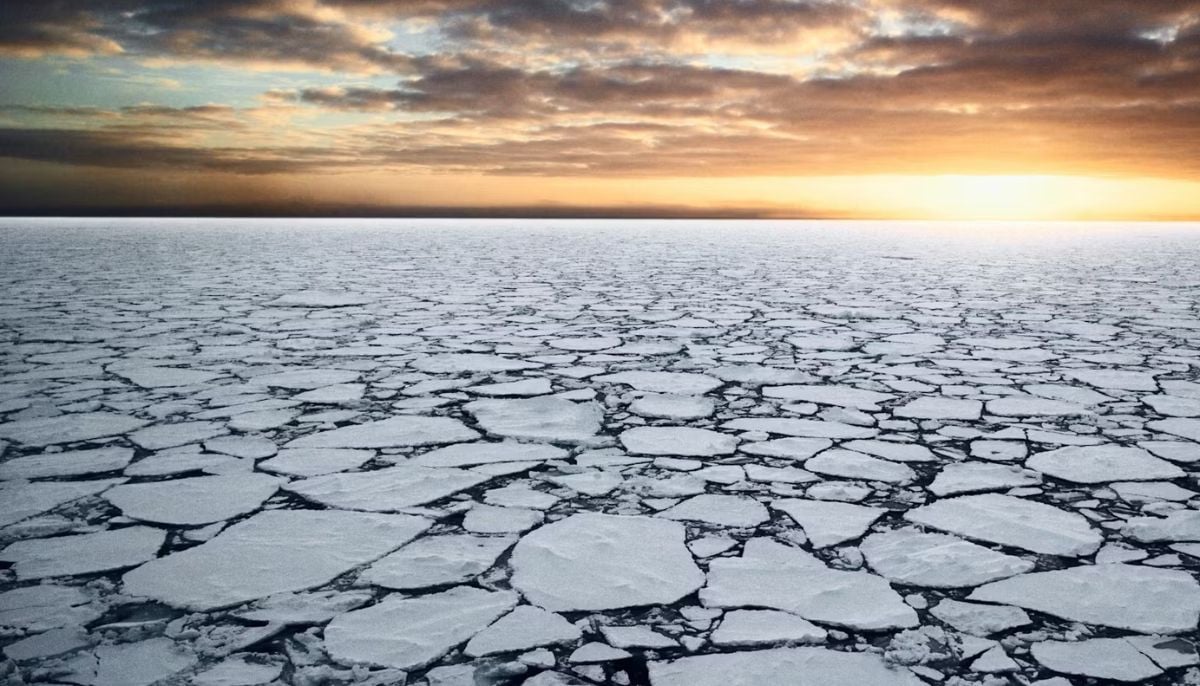
After decades of proving ‘resilient’ to global warming, Antarctica’s sea ice has entered a period of sharp decline. In 2023, winter ice levels fell to a record low – a statistical anomaly with only a 1 in 3.5 million chance of occurring in nature. The speed of this melt has shocked the scientific community.
Meanwhile, current climate models have failed to predict such a rapid decline, suggesting that ecological shifts are happening much faster – or through different mechanisms – than previously thought. The crisis is caused by a decades-long chain reaction.
The stronger winds, caused by greenhouse gas emissions and the ozone hole, have acted like a pump, pushing warm and salty water from the deep ocean to the surface.
The Southern Ocean is now caught in a self-reinforcing cycle. As rising heat melts the ice on the surface, the remaining water becomes saltier and denser, mixing more easily with warmer deep water.
This process prevents the formation of new ice and accelerates further melting. Antarctic sea ice supports one of the world’s most distinctive ecosystems.
The loss of ice is already changing Antarctica’s unique ecosystem, with lower sea ice levels already linked to the mass drowning of emperor penguin chicks.
Experts warn that a long-term shift could destabilize not only the climate itself, but all life in the Southern Ocean, threatening the algae and krill populations that form the base of the food chain for whales and seals.
The loss of ice is already changing Antarctica’s unique ecosystem. Antarctica acts as a ‘mirror’, reflecting sunlight to cool the planet; However, if these conditions continue, the Southern Ocean will stop limiting global warming and start accelerating it.