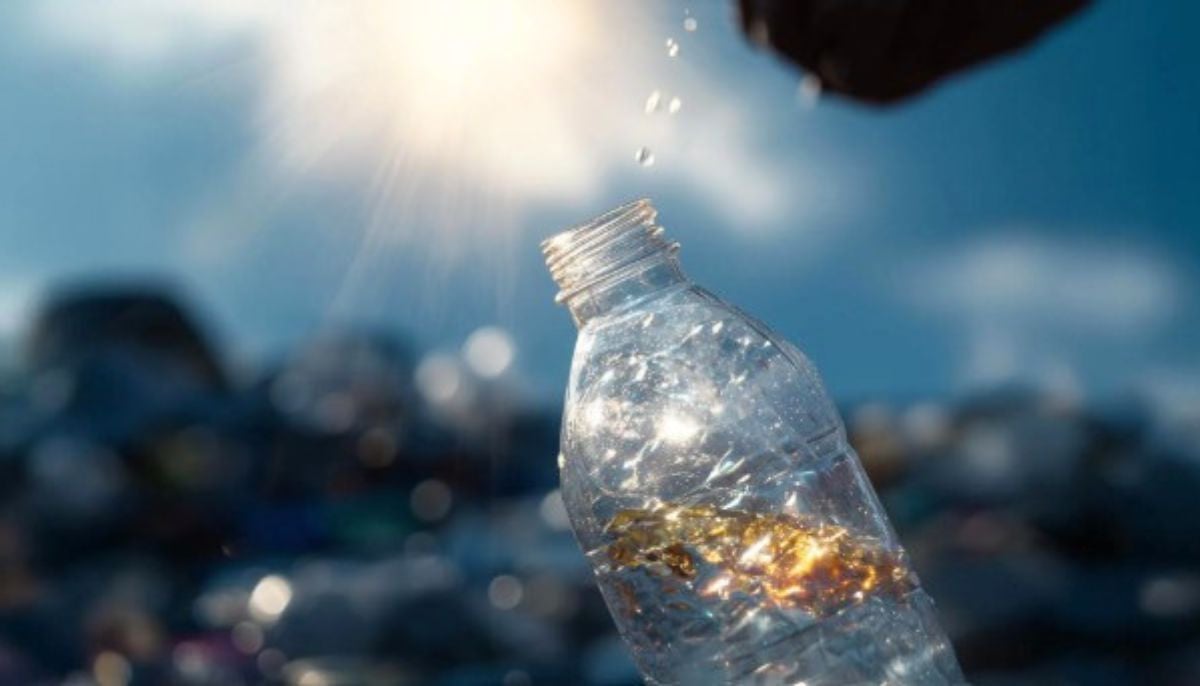
Scientists have been trying for years to reduce the carbon footprint and recycle waste material into reusable substances.
Next, scientists are developing a new way to tackle two major global problems at once, such as plastic pollution and the demand for clean energy.
A recent study led by PhD candidate Xiao Lu from the University of Adelaide investigates how solar-powered systems can convert waste plastic into hydrogen, syngas and other industrial chemicals.
The research, published in Chem Catalysis, shows that plastics, which are rich in carbon and hydrogen, can be treated as a resource rather than just waste.
By simply using sunlight, they find ways to convert discarded plastic into useful fuels such as hydrogen, offering a breakthrough solution to both pollution and energy challenges, which could turn waste into a valuable resource for a low-carbon future.
The method called solar-powered photoreforming relies on light-sensitive materials known as ‘photocatalysts’ that use sunlight to break down plastics at relatively low temperatures.
Researchers believe that plastic waste is a hidden energy source, and at the same time, the need to move away from fossil fuels has intensified the search for cleaner energy alternatives.
It is striking that more than 460 million tons of plastic are produced worldwide every year, and that large quantities ultimately pollute the land and oceans.
“Plastics are often seen as a major environmental problem, but they also present opportunities. If we can efficiently convert waste plastics into clean fuels using sunlight, we can tackle pollution and energy challenges at the same time.”