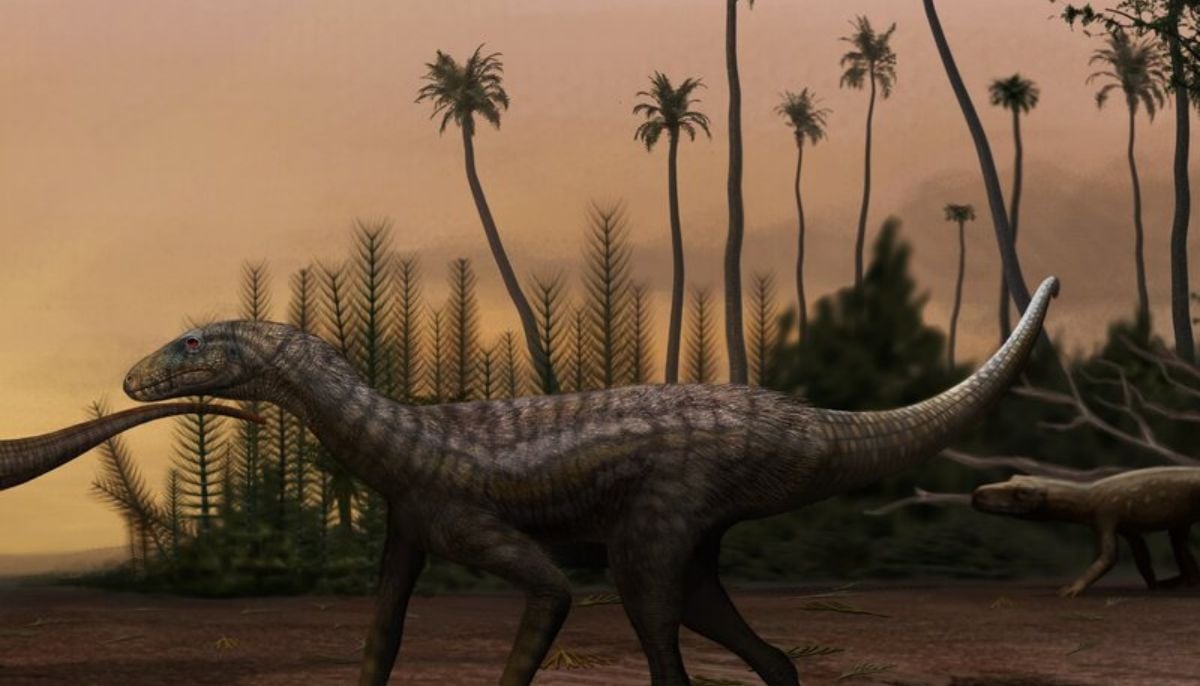
Brazilian scientists have unveiled a new species of giant dinosaur in a recent breakthrough, the largest found in the South American country.
Named Dasosaurus tocantinensis, the recently discovered species also shared important revolutionary ties with a similar dinosaur, Garumbatitan morellensisfrom Spain.
The dinosaur’s name pays tribute to the nearby Tocantins River, which flows along the western edge of the fossil site.
The discovery published in the Journal of Systematic Paleontologyprovides new evidence of prehistoric land bridges between South America, Africa and Europe.
The fossils were found in 2021 at an infrastructure site near Davinopolis, in Brazil’s northeastern state of Maranhao.
The study of fossils, led by Elver Mayer of the Federal University of the Sao Francisco Valley, includes a femur measuring about 1.5 meters, which provides an estimate of the animal’s length.
According to the researchers, the species could grow up to 20 meters long.
“As the excavation progressed over the days, we started to see evidence of that huge bone, the femur,” says Leonardo Kerber, a paleontologist at the Federal University of Santa Maria (UFSM) who contributed to the study.
“This indicates that it was a very large dinosaur. Today we know that Dasosaurus is one of the largest dinosaurs ever found in Brazil,” Kerber noted.
These findings strengthen the theory that these continents remained connected by land routes about 120 million years ago. Due to the interconnectedness of countries, the European dinosaur lineage may have spread through North Africa to South America about 130 million years ago.