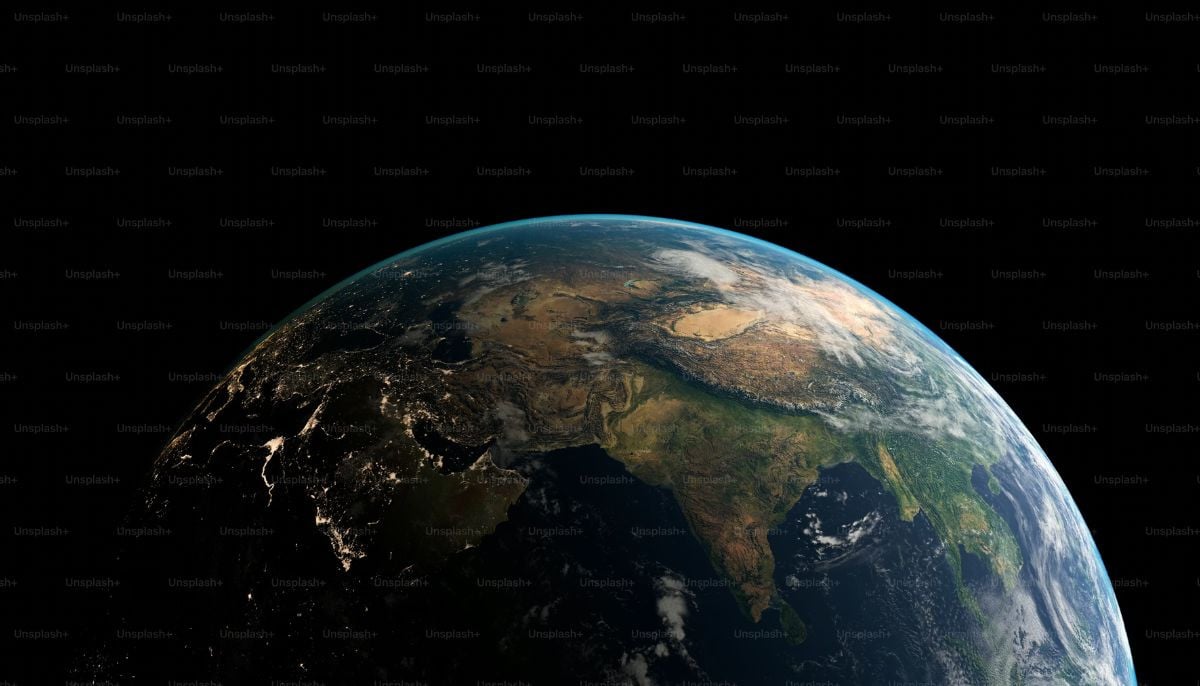
You may not be aware of this, but the Earth actually casts a huge shadow into space, and under the right conditions this shadow can be seen. Although most people associate this with a lunar eclipse, scientists say the Earth’s shadow can be seen much more often, even from the ground just before or after sunrise or sunset.
The shadow itself is caused by the earth blocking the sun’s rays, causing dark spots to appear. These spots can be seen on the moon, other satellites and even in the sky.
What is the shadow of the Earth?
The shadow consists of three sections, including the dark central umbra, the lighter penumbra, and the distant antumbra. The full moon enters the penumbra during a total lunar eclipse and then moves into the umbra as it transforms from a dim light to a deep red color as sunlight spreads through the Earth’s atmosphere.
Emily Rice, a professor of astronomy at the Macaulay Honors College, explained that we observe sunrises and sunsets, which occur on Earth, through their reflection on the moon.
The partial lunar eclipse reveals the moon’s shadow, while the black spots on the moon show where the penumbra and umbra meet. The shadow shows that Earth’s atmosphere is changing because a dustier or cloudier atmosphere makes the moon appear redder.
You don’t have to wait for a solar eclipse to see the Earth’s shadow. Before or after a sunrise, the Earth’s shadow will appear as a curved shadow on the horizon opposite the sun. Raymond L. Lee, adjunct professor at the US Naval Academy, says: “The shadow appears when the Earth blocks direct sunlight from illuminating the atmosphere. The shadow appears about 15 minutes before or after sunrise or before or after sunset.”
Other objects that pass through Earth’s shadow are satellites and other objects in space. Geostationary satellites pass through the umbra for a few minutes around equinox time. Asteroids like 2016 VA appear to dim as they pass through the shadows. The shadow is 1.4 million kilometers (870,000 miles) long from Earth.