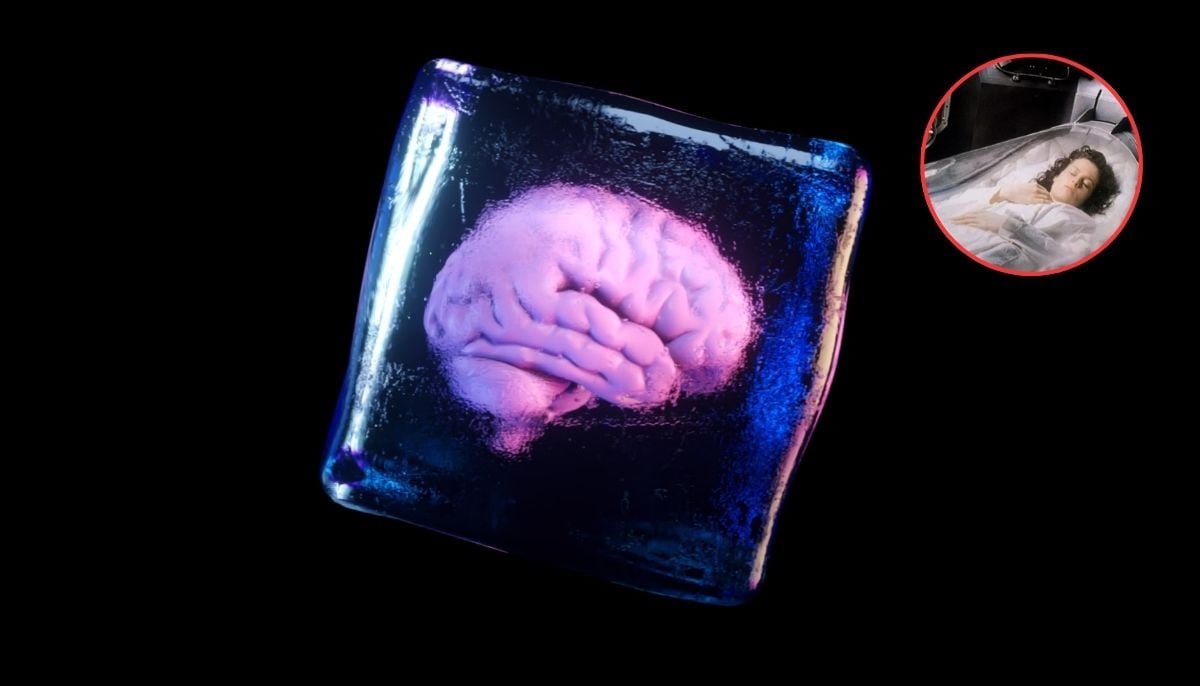
The concept of ‘cryosleep’ has always been considered a far-fetched reality. To our surprise, the idea moves from the realm of science fiction to the laboratory dominated by the reawakening of “frozen brains” in a groundbreaking study.
While the idea of cryopreservation. Freezing a body or organ only to be revived later has long been met with skepticism and ‘ice crystal’ damage. Researchers recently achieved an important milestone using brain tissue from mice.
In a recent breakthrough, researchers in Germany successfully preserved and revived brain tissue from mice, leaving functional biological processes intact.
Previously, attempts to revive cryopreserved brains were only successful at the cellular level, but failed to restart the brain’s functionality.
The research, which was published in Proceeding of the National Academy of Sciences, offers unique insights due to the restoration of the brain’s machinery.
For example, the team observed neuronal firing, which is characterized by the ability of brain cells to respond to electrical stimuli. Active mitochondrial function was also observed without metabolic damage.
The brain has also been found to strengthen synaptic pathways, which provide the biological basis for learning and memory during the experiments.
When scaled up to the whole organ, the team successfully recorded functional hippocampal pathways after thawing.
Mrityunjay Kothari, who studies mechanical engineering at the University of New Hampshire in Durham, said: “These kinds of advances are gradually turning science fiction into scientific possibilities.”
The researchers used the ‘vitrification’ method to prevent damage to the crystal ice responsible for puncturing or displacing the delicate nanostructure of the neurons.
Will people benefit from it in the future?
The researchers hope to expand their research from mouse brain tissue to the human brain.
“We already have preliminary data showing the viability of human cortical tissue,” said Alexander German, a neurologist at the University of Erlangen-Nuremberg in Germany and lead author of the study.
Furthermore, the team also plans to use vitrification for heart cryopreservation, with the aim of establishing organ banks for transplants.
However, the study has several limitations. For example, large organs may experience thermomechanical stress and cracking due to heat transfer limitations.
German hoped that “better vitrification solutions and cooling and warming technologies will be needed before these principles can be applied to large human organs.”