A team of astronomers from the Center for Astrophysics | Harvard & Smithsonian have pioneered a new field called “extragalactic archaeology.”
This is evident from a new study published in the journal Nature Astronomyscientists found a way to reconstruct the evolution and timeline of distant galaxies. Previously, the ‘extragalactic archaeology’ method was only used for the Milky Way Galaxy.
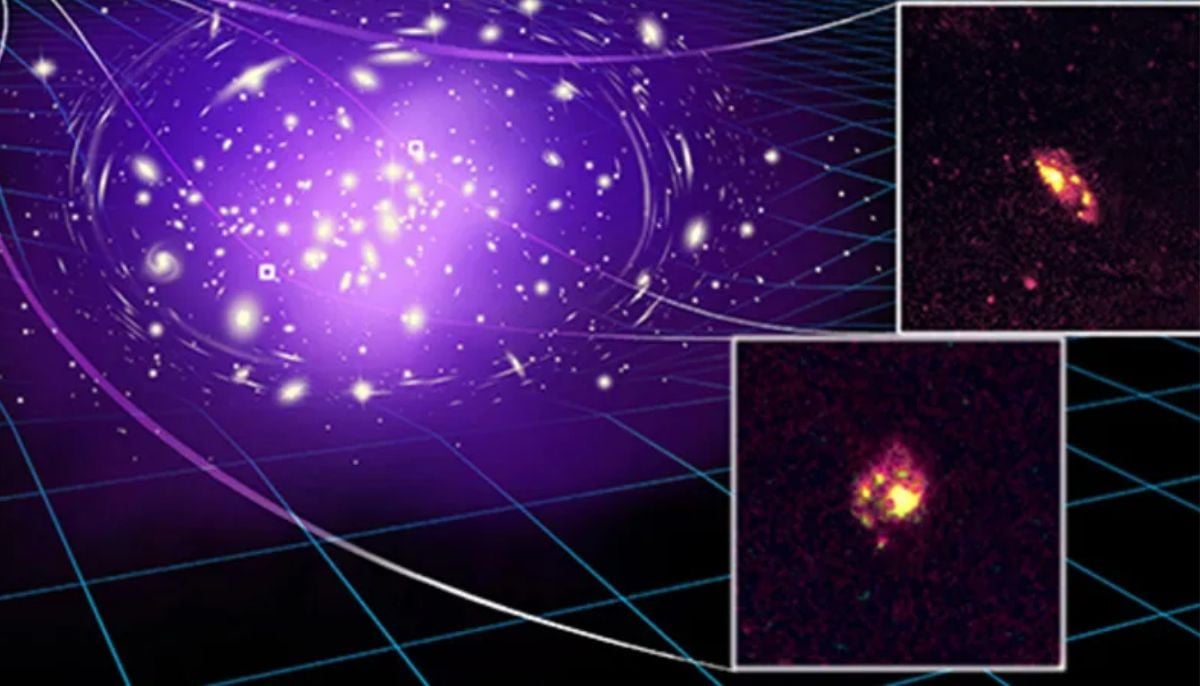
By studying the chemical ‘fingerprints’, particularly oxygen patterns, in the distant spiral galaxy NGC 1365, researchers were able to reconstruct its 12 billion-year history.
“This is the first time a chemical archeology method has been used with such fine detail outside our own galaxy,” said Lisa Kewley, lead author, professor at Harvard and director of the Center for Astrophysics.
Comparing real-world observations from the TYPHOON survey with 20,000 computer simulations from the Illustris Project, the team found that NGC 1365 grew from a small cluster into a giant spiral through continued mergers with smaller dwarf galaxies.
Key findings also include:
- The central region emerged very early in cosmic history.
- The galaxy grew over 12 billion years by ‘consuming’ smaller dwarf galaxies.
- The outer spiral arms are relatively young, having only formed within the last few billion years.
- Oxygen patterns are formed by star formation, supernova explosions, gas flows and galactic mergers.
According to Lars Hernquist, Mallinckrodt Professor of Astrophysics at Harvard and CfA astronomer, “this study shows that the astronomical processes we model on computers shape galaxies like NGC 1365 over billions of years.”
This new field of ‘extragalactic archaeology’ offers a new blueprint for understanding how galaxies, including our own Milky Way, formed and evolved over cosmic time.
This breakthrough will allow scientists to compare the Milky Way galaxy with other distant galaxies to determine the evolution of our galaxy.