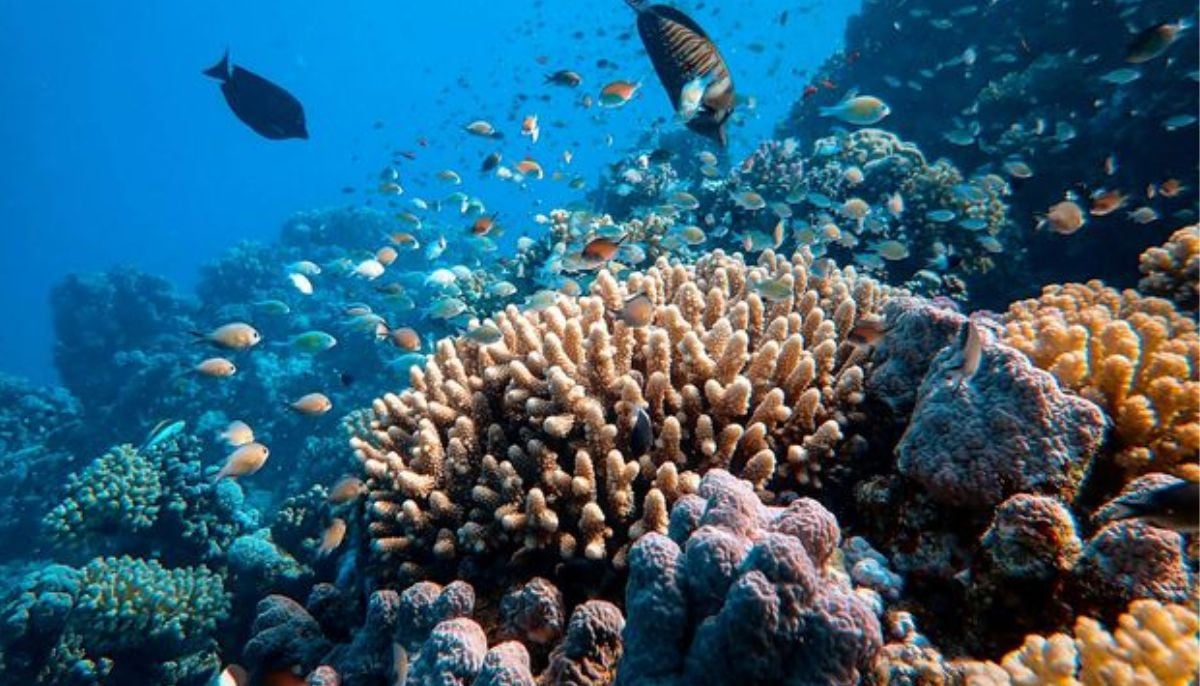
Caribbean reefs have suffered a massive loss of hard coral cover since 1980, a new study suggests.
According to the Global Coral Reef Monitoring Network, climate crises such as destructive marine heat waves are responsible for the loss of nearly 48 percent of coral cover.
These heat waves mainly affect the microalgae, the food of coral, and make them toxic.
According to Dr. Jérémy Wicquart, one of the observations of the study’s editors, the Caribbean experienced the most fatal thermal stress ever recorded in the period 2023-2024, leading to a 16.9 percent year-on-year decline. During last year’s dives, Wicquart observed massive coral bleaching caused by the loss of essentially nourishing microalgae.
“All the corals were bleached. All the white corals. I was very struck by that. It’s completely different when you see it in the field than when you see it on a graph,” he added.
Coral reefs are of great importance to the GDP of the Caribbean, generating $6.2 billion per year through tourism and fishing.
In addition to the coral reef crisis, the recent crisis also highlighted the successes in coral conservation. For example, the Mexican government has developed a new marine protection area in the Gulf of Mexico that connects two national parks, creating a habitat where corals and reef species thrive.
“If you do something about climate change, you will reduce thermal stress on coral reefs and the impact of cyclones. The second important solution is to reduce local threats. You can improve water quality, limit mass tourism and implement marine protected areas. These are ways to improve the coral reef on a local scale,” said Wicquart.
Covering 1 percent of the world’s seabed, coral reefs support 25 percent of marine species.