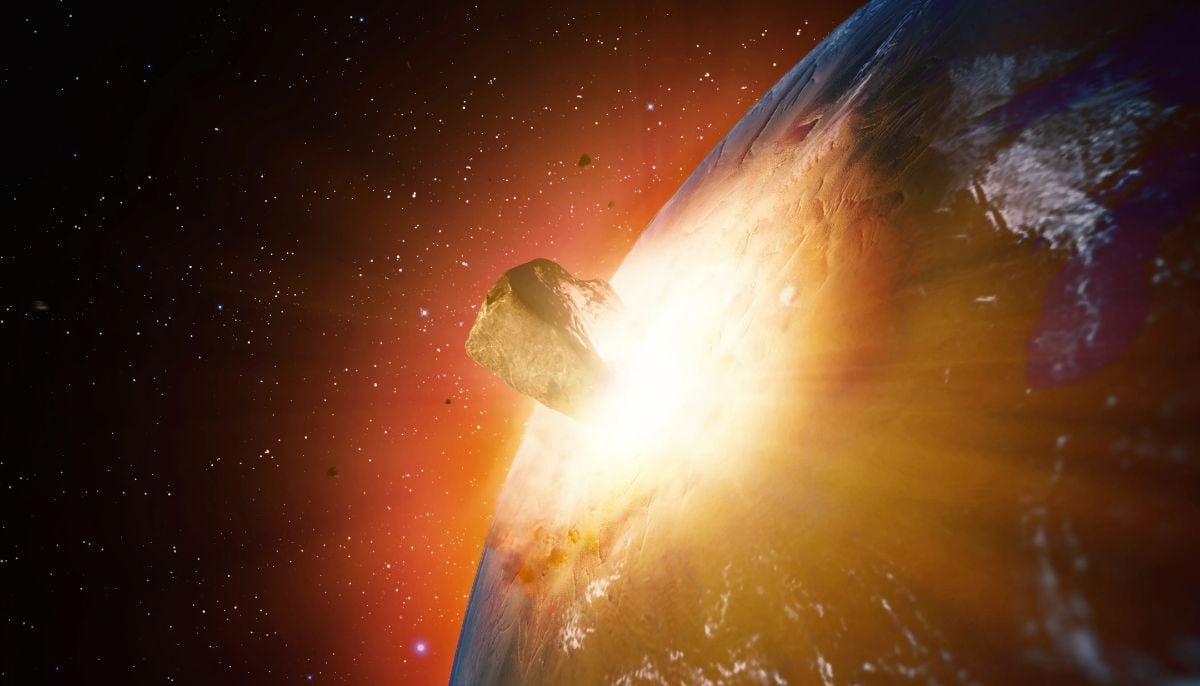
In 2022, NASA conducted an experiment to see if they could protect Earth from huge, deadly space rocks. The scientist deliberately crashed a spacecraft into a small asteroid called Dimorphos to see if they could deflect it and save the world.
The mission, called the Double Asteroid Redirection Test or DART, ultimately proved successful.
But a new study shows that the DART mission was more than a success for the planet. The scientists found that the intentional crash not only deflected its orbit around the Sun due to the push, but also shifted Dimorphos’ orbit around its current asteroid.
This is the very first time NASA has witnessed the deflection of a celestial body around the sun. The recent breakthrough will protect the Earth from future asteroid implications.
According to Rahil Makadia, the study’s lead author, “If we ever find an asteroid heading towards Earth, we need to change its motion around the sun.”
According to the findings of the study published in Scientific progressAlthough the changes in deflection are small (only 150 milliseconds per trip around the sun), the breakthrough will be enough to protect Earth.
“While this seems small, a small deflection … can add up over decades and make the difference between a potentially dangerous asteroid hitting or missing Earth in the future,” Makadia said.
“In all save-the-planet tests, the key doesn’t provide a big push at the last minute. The key provides a small push many years in advance,” he added.
NASA launched the DART spacecraft in 2021 with the aim of deliberately crashing into the 160-meter-wide Dimorphos, which orbits a larger asteroid Didymos. Ten months later, a DART hit Dimorphos at a speed of 22,000 kilometers per hour.
Initially, NASA saw that the crash changed the way Dimorphos orbited its partner. But now, after years of observation from Earth, scientists have confirmed that the crash changed their entire journey around the sun, shrinking the asteroids’ orbit by 2,300 feet at a distance of 300 million miles.
In 2024, the European Space Agency launched a spacecraft named Hera to Didymos and Dimorphos, which is expected to arrive in November. According to the scientists, Hera’s data will help them comprehensively analyze the impact and study the changes in the Dimorphos structure.
Steven Chesley of NASA’s Jet Propulsion Laboratory, who took part in the study, said: “Although it is only one experiment, it is nevertheless an important data point that will be relevant to future asteroid deflection missions.”