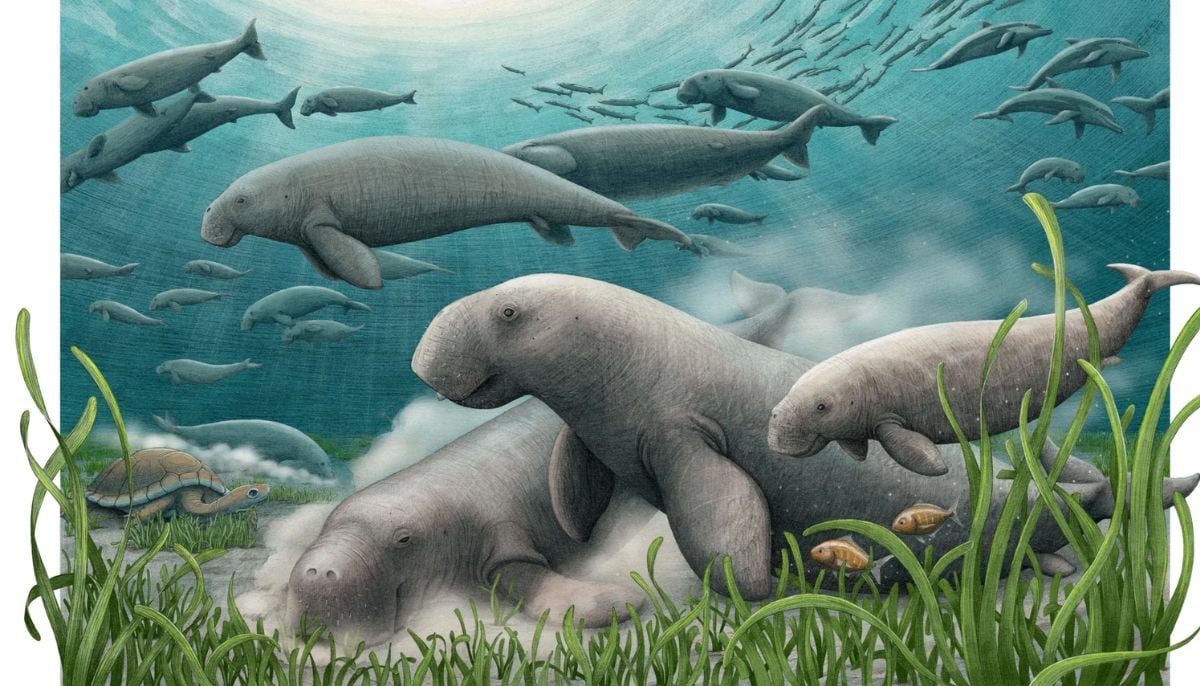
Scientists have discovered 21-million-year-old tiny fossils of manatees dating back to the early Miocene during a recent breakthrough in Qatar.
The researchers, working with the Smithsonian’s National Museum of Natural History and Qatar Museums, attributed the fossils to a previously unknown species of ancient manatee called Salwasiren qatarensis.
Salwasiren qatarensis was relatively small, weighing about 250 pounds, which is almost eight times smaller than modern dugongs.
Evidence shows that the manatee’s ancestors have depended on aquatic plants for 50 million years.
According to Nicholas Pyenson, curator of fossil marine mammals and lead author of the study, “we discovered a distant relative of dugongs in rocks less than 10 miles from a bay with seagrass meadows that are their main habitat today.”
“This part of the world has been an important habitat for manatees for the past 21 million years – but the role of manatees has been taken over by different species over time,” he added.
These findings have been published in the journal PeerJare important because modern dugongs in the Arabian Gulf face potential threats from inadvertent fishing, rising temperatures, coastal development and increasing salinity, putting pressure on the seagrass meadows on which the dugongs depend.
“If we can learn from previous data how seagrass communities survived climate stress or other major disturbances such as sea level changes and salt shifts, we can set goals for a better future of the Arabian Gulf,” Pyenson said.
Faisal Al Naimi, co-author of the study, said: “Dugongs are an integral part of our heritage, not only as a living presence in our waters today, but also in the archaeological record that connects us to generations of the past.”