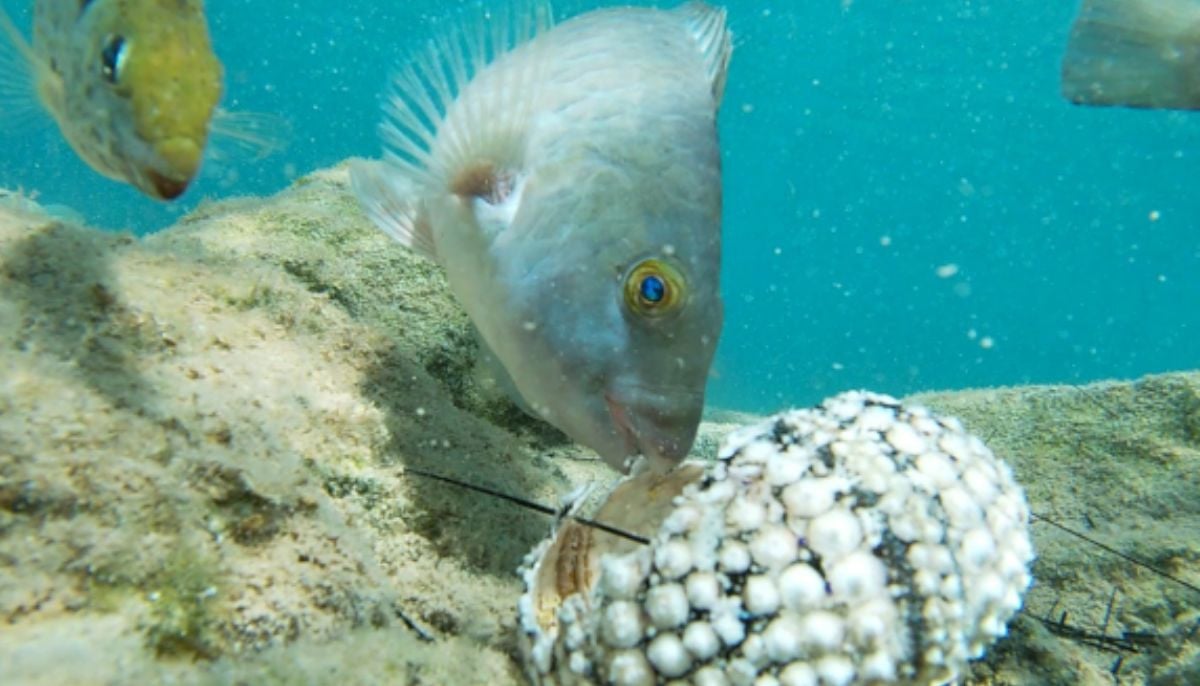
A surprising study has found that an unrecognized marine pandemic is causing mass mortality by critically endangering some sea urchin species and causing some populations to disappear altogether.
Diadema africanum Hedgehogs on the Canary Islands archipelago have been almost completely killed by an unknown disease.
As reported by the GuardianThe data shows a 99.7% population decline in Tenerife, and a 90% decline off the island of the Madeira archipelago.
A large number of mortalities have been analyzed in species from the Red Sea, the Mediterranean Sea, the Caribbean and the western Indian Ocean.
Sea urchins are remarkable creatures, best known as relatives of the starfish. They have been observed to inhale through their feet.
While their spines provide an impenetrable barrier against predators, they also provide refuge for smaller marine animals.
They are specifically known as ‘ecosystem engineers’, making a significant impact on their environment by foraging for algae, providing food for other animals and breaking down organic matter.
Furthermore, by limiting algae growth, they promote the survival of hard coral. Their decline is acutely felt in the Caribbean reefs, where coral cover has halved and algae cover has increased by 85%.
The Diadem genus, which lives in tropical waters worldwide, is commonly distributed and is ecologically important to the hedgehog family.
A researcher at the University of La Laguna and author of the study said: “We are not sure how this pandemic has developed. It appears that the pandemic has not spread to other populations in South Asia and Australia, but we cannot rule out the possibility that the disease will reemerge and possibly spread further.”
The recent analysis has shown that without these grazing sea urchins, the recovery of already damaged coral reefs worldwide will be hampered.